How much would a 2% wealth tax on assets over £10 million raise, and how many people would it affect?
An annual 2% tax on wealth above £10 million would raise around £24 billion per year, according to Patriotic Millionaires UK and Tax Justice UK, affecting only roughly 20,000 people — about 0.04% of the population.
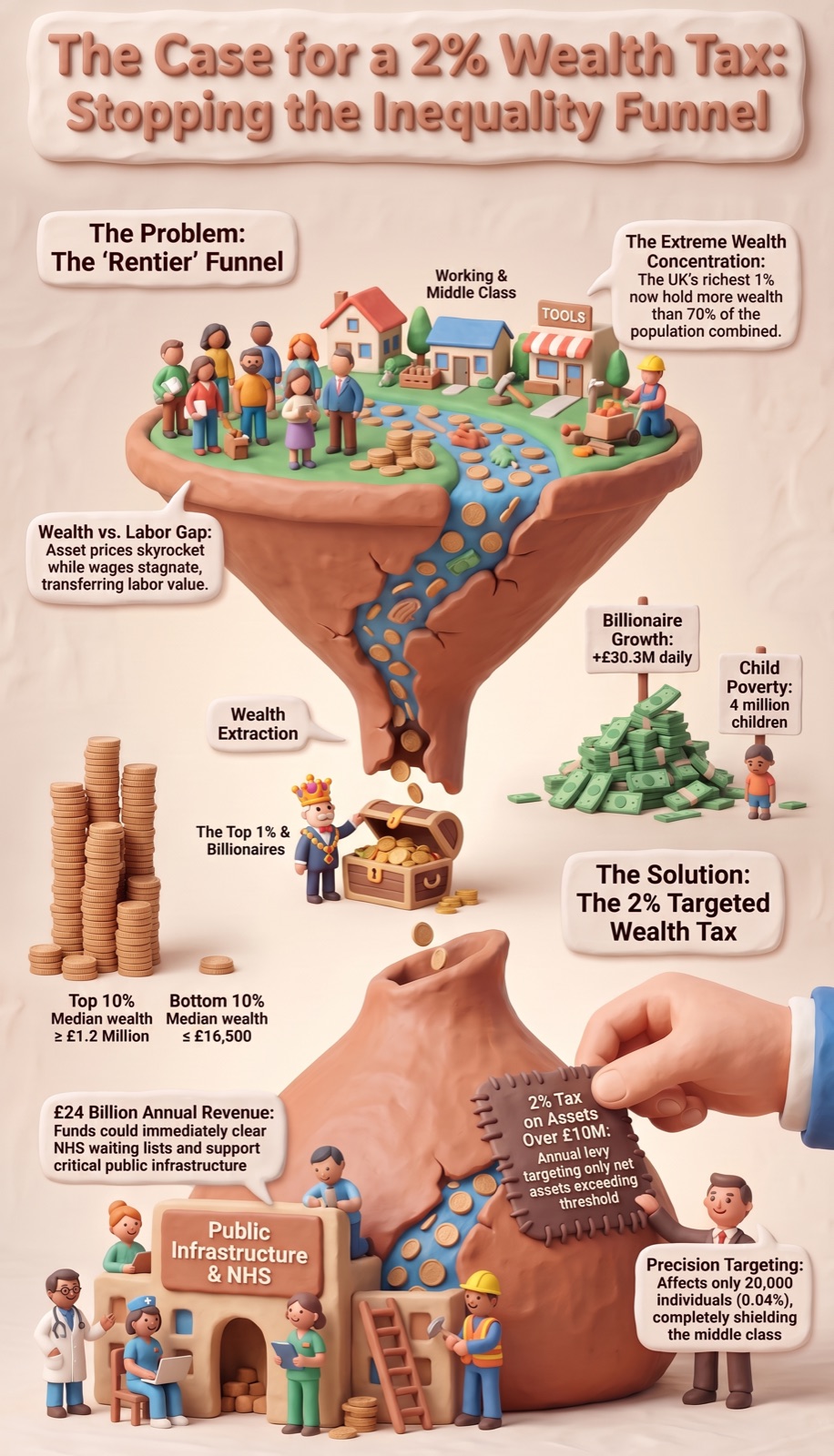
Patriotic Millionaires UK and Tax Justice UK have put forward a proposal for a 2% annual tax on the net assets of individuals with more than £10 million in total wealth. Their analysis estimates this would raise approximately £24 billion every year. For context, that sum is roughly equivalent to the entire annual budget of the Home Office, or enough to clear the NHS England waiting list backlog within a defined timeframe.
The threshold of £10 million is deliberate. It means the tax falls on approximately 20,000 individuals in the UK, which is fewer than 0.04% of the population. It does not touch homeowners, small business owners, pension savers, or the broad professional middle class. A couple who own a £600,000 house and have decent pension savings would not pay a penny under this proposal.
The £10 million threshold also addresses a practical concern about HMRC's capacity. Rather than requiring millions of returns, the tax authority would need to accurately assess the assets of a highly manageable 20,000 people. This allows specialist resources, including investigators familiar with offshore structures and complex private equity holdings, to be deployed where they are needed most.
The 2% rate is itself modest relative to the returns ultra-high-net-worth individuals typically receive from their portfolios. If a £50 million portfolio grows by 7% in a year, a 2% charge leaves the owner with a 5% net gain. The tax does not erase returns; it reduces them slightly for a group whose wealth growth already dwarfs any conceivable spending need.
“I'm saying can we just stop this situation where working people pay 50% and billionaires pay 0%”— Gary Stevenson, Channel 4 News interview
Common questions
- Who would actually pay this tax?
- Only around 20,000 individuals whose total personal net wealth exceeds £10 million. This is a small fraction of the UK's 67 million people, and far below the threshold that would affect most successful professionals, small business owners, or homeowners.
- What would £24 billion fund?
- It is roughly equivalent to the total annual spending on all UK primary schools, or enough to significantly reduce NHS waiting times, invest in housing, or restore local council budgets that have been cut since 2010.
- Is the £24 billion figure credible?
- Tax Justice UK and Patriotic Millionaires UK base it on ONS wealth distribution data combined with HMRC administrative records. The figure is broadly consistent with academic estimates, though the exact amount would depend on compliance rates and how the tax is structured.
Sources — check them yourself
- Policy recommendations 2025 Patriotic Millionaires UK
- How to raise £60 billion for public services: ten tax reforms Tax Justice UK
- Debunking 5 common myths about wealth taxes Tax Justice UK
- Wealth taxes Institute for Government
- Wealth Tax Commission — full report LSE / Wealth Tax Commission